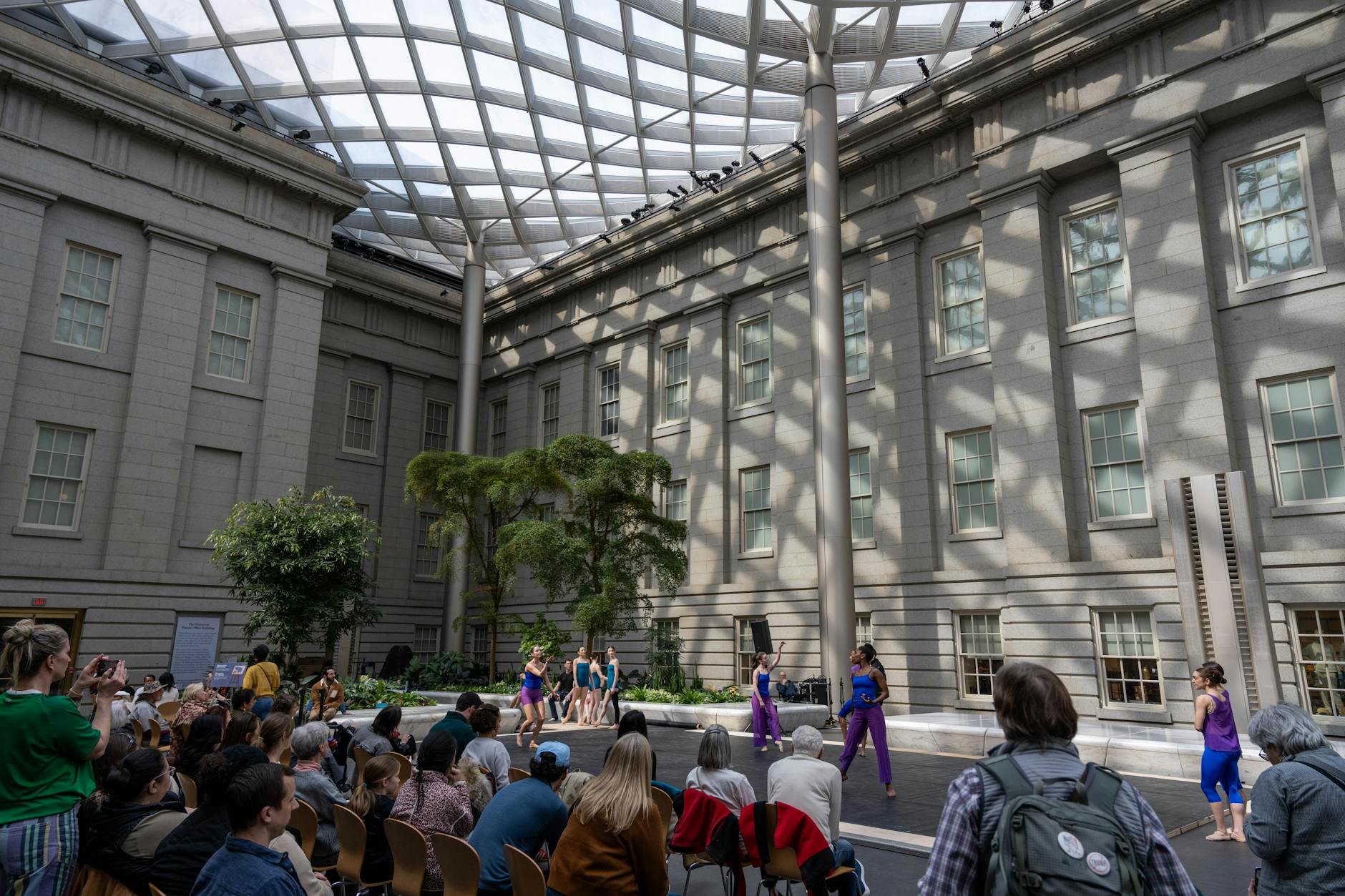
The corridors of the Smithsonian American Art Museum (SAAM) in Washington, D.C., are poised to echo with renewed purpose as Lynda Roscoe Hartigan steps into the role of director—a pivotal appointment that arrives at a defining moment for American cultural institutions. Hartigan, currently executive director and CEO of the Peabody Essex Museum in Salem, Massachusetts, brings with her a career-long dedication to modern and contemporary art, a deep commitment to curatorial integrity, and a rare ability to navigate the fraught intersection of art, politics, and public discourse.
This move is not merely a leadership change; it represents a strategic reaffirmation of the museum’s role as a guardian of diverse narratives in American art. As the nation grapples with evolving conversations about race, identity, and historical representation, Hartigan’s appointment positions SAAM at the forefront of cultural preservation and interpretive innovation.
Hartigan’s relationship with the Smithsonian American Art Museum spans more than four decades. She began her career there in the 1970s, a time when the institution was expanding its focus beyond traditional Eurocentric models to embrace a broader, more inclusive vision of American art. Her early work included founding the Joseph Cornell Study Center, a groundbreaking initiative dedicated to the enigmatic and visionary collage artist whose surreal, poetic assemblages defied easy categorization.
In 2003, Hartigan rose to the position of chief curator at SAAM, where she oversaw exhibitions that challenged conventional narratives and championed underrepresented voices. Her 2007 biography of Joseph Cornell—Joseph Cornell: Shadowplay Eterniday—remains a definitive text on the artist and a testament to her scholarly rigor and intuitive grasp of modernist experimentation. Cornell’s work, with its collaged dreamscapes and archival obsessions, embodies the kind of artistic individuality that Hartigan has consistently championed: art that is deeply personal, conceptually daring, and resistant to easy commodification.
Her transition to the Peabody Essex Museum in 2019 solidified her reputation as a leader capable of steering institutions through periods of transformation. At PEM, she expanded the museum’s global outreach, launched initiatives in contemporary Indigenous art, and strengthened partnerships with artists from marginalized communities. Now, as she returns to SAAM as its director, Hartigan inherits a mandate to lead with both vision and resilience—especially in the face of external pressures.
The political climate surrounding SAAM has been anything but neutral. During the Trump administration, the museum faced direct targeting due to its commitment to exploring race, identity, and national memory through art. A 2020 exhibition, “Race and Sculpture in America”, became a flashpoint when the White House issued an executive order threatening federal funding for institutions that addressed “divisive concepts” in their programming. The order specifically cited SAAM’s exhibition, signaling a dangerous conflation of historical inquiry with ideological subversion.
In response, a group of artists withdrew from a related symposium, citing concerns that museum leadership had capitulated to political pressure by making the event private. The episode underscored the precarious balance institutions must strike: between intellectual freedom and institutional survival, between public engagement and political neutrality. Hartigan’s appointment signals a recommitment to art as a site of dialogue, dissent, and discovery—even when that dialogue is uncomfortable.
In her first public statements, Hartigan emphasized the museum’s role as a “laboratory for democracy through art.” This framing positions SAAM not as a passive repository of cultural artifacts, but as an active participant in the nation’s ongoing conversation about who we are—and who we aspire to be.
In a parallel universe of art movements, the Turner Prize—the United Kingdom’s most prestigious contemporary art award—has announced its 2026 shortlist. The finalists represent a cross-section of global perspectives, each pushing the boundaries of form, material, and meaning.
The 2026 shortlist includes:
The Turner Prize exhibition will open at the Middlesbrough Institute of Modern Art (MIMA) this fall, offering a rare platform for these four artists to present new bodies of work. Each finalist receives £10,000, while the winner—announced in December—secures an additional £15,000 (total £25,000) and international acclaim.
This year’s shortlist reflects a broader shift in global art movements toward decolonial narratives, interdisciplinary practice, and embodied knowledge. Humeau’s speculative ecosystems, for instance, challenge the anthropocentric view of art history, while Sasraku’s paintings reclaim African visual languages in a contemporary context. The Turner Prize, once criticized for its Eurocentrism, has increasingly become a barometer of how global art is evolving beyond traditional Western canons.
Global recognition and institutional appointments are only part of the broader landscape of art movements reshaping the cultural ecosystem in 2026. Here are some of the most significant developments:
Ibrahim Mahama Awarded Arnold Bode Prize (Kassel, 2026)
Ghanaian artist Ibrahim Mahama has been named the recipient of the Arnold Bode Prize, Kassel’s highest honor for artists whose work engages with social justice and collective memory. Mahama is celebrated for his monumental jute sack installations—works that repurpose discarded materials from global trade routes to create immersive, textural commentaries on labor, migration, and postcolonial economies. His practice embodies the ethos of art as social intervention and aligns with a growing wave of artists using materiality to expose systemic inequities.
Indigo Arts Alliance Appoints Mia Bogyo as Deputy Director
The Indigo Arts Alliance, a Portland-based artist residency dedicated to supporting BIPOC and global majority artists, has appointed Mia Bogyo as its new deputy director. Bogyo brings a background in community-based arts and curatorial practice, with a focus on Indigenous and Afro-diasporic art forms. Her appointment reflects a broader trend toward institutional leadership that centers equity and lived experience.
Rainin Arts Fellowship Honors Bay Area Creatives
The Rainin Arts Fellowship, administered by United States Artists, has selected four Bay Area artists working across disciplines—Sarah Crowell (dance), Cheryl Dunye (film), Cece Carpio (public space), and Danny Duncan (theater)—to receive grants totaling $50,000 each. This fellowship underscores a growing recognition of cross-disciplinary collaboration and the role of art in civic life. Projects supported by the fellowship often intersect with social justice, environmental sustainability, and community healing.
Print Center New York Announces 2026 New Voices Cohort
The Print Center New York, a hub for contemporary printmaking and works on paper, has announced eight artists in its fourth annual New Voices cohort: Noah Breuer, Zoran Dobric, Johannah Herr, Jazzmen Lee-Johnson, Michael Menchaca, Melih Meric, Anette Millington, and Amy Yoes. The program supports emerging printmakers whose work challenges conventions in technique and subject matter. This year’s cohort reflects a surge in print-based activism, with several artists using lithography, screenprint, and digital techniques to address racial justice, queer identity, and ecological crisis.
In an unusual convergence of institutional power and artistic vision, Johns Hopkins University has acquired a monumental diptych by artist Lindsay Adams: Kind of Blue (1959) (2024). The work is a sweeping abstract meditation on Miles Davis’s iconic 1959 album Kind of Blue, reimagining jazz improvisation through layers of oil, resin, and digital collage. The acquisition was made possible through a generous gift from Dan Weiss, CEO and director of the Philadelphia Museum of Art, a Hopkins alumnus, and former chair of the university’s Art History department.
What makes this story remarkable is not just the scale of Adams’s work—measuring over eight feet in height and twelve feet in width—but the role of institutional leadership in its acquisition. Weiss, who has long championed the integration of art and academia, leveraged his position to secure the piece for Hopkins’ growing contemporary collection. The donation reflects a broader trend in higher education: the recognition of art as a vital tool for interdisciplinary learning and creative inquiry.
Kind of Blue (1959) is more than a visual homage to a musical landmark; it is a sensory and intellectual bridge between disciplines. Adams’s layered technique invites viewers to experience music through visual rhythm, texture, and color—an example of how contemporary art movements are dissolving traditional boundaries between mediums. The acquisition positions Johns Hopkins at the forefront of institutions that treat art not as an ancillary subject, but as a core language of human expression.
The appointments, awards, and acquisitions of 2026 paint a vivid picture of where global art movements are headed. Several key trends emerge:
These developments are not isolated incidents—they are symptoms of a larger transformation in how we define, value, and participate in culture. The appointment of Lynda Roscoe Hartigan at SAAM is significant not only for her curatorial expertise but for her potential to redefine what a national museum can be in the 21st century. In an era when some leaders seek to erase uncomfortable histories, Hartigan’s leadership is a reassertion that art is a site of truth, complexity, and possibility.
The Turner Prize shortlist, with its global perspectives and radical forms, reminds us that art movements are not static—they are living, breathing responses to the world around us. Artists like Marguerite Humeau and Tanoa Sasraku are not just making objects; they are crafting new languages of perception that challenge viewers to see beyond the familiar.
Meanwhile, the emergence of programs like the Rainin Arts Fellowship and the Print Center’s New Voices cohort signals a democratization of cultural production. These initiatives recognize that art is not the sole domain of elite institutions or wealthy collectors—it belongs to communities, to students, to activists, to dreamers.
And in the quiet halls of Johns Hopkins University, Lindsay Adams’s Kind of Blue hangs not as a decorative object, but as a manifestation of interdisciplinary brilliance—proof that art can unite disparate fields and ignite new ways of knowing.
As the year unfolds, several key exhibitions, appointments, and conversations are worth following:
These moments, scattered across institutions and continents, are not merely trends—they are signposts of a cultural renaissance. They reflect a collective hunger for art that does more than decorate walls; it transforms minds, challenges systems, and reimagines futures.
In a world that often seeks to divide, art movements in 2026 are uniting—through shared struggles, diverse voices, and a renewed belief in the power of creativity to illuminate the path forward.
From the corridors of the Smithsonian American Art Museum to the galleries of Middlesbrough, from the print studios of New York to the university halls of Baltimore, the art world in 2026 is alive with possibility. Leaders like Lynda Roscoe Hartigan, artists like Ibrahim Mahama and Tanoa Sasraku, and institutions like Indigo Arts Alliance and Print Center New York are not just responding to the moment—they are defining it.
In an era marked by political polarization, environmental crisis, and rapid technological change, art remains one of humanity’s most resilient tools for understanding and reimagining reality. Whether through a sculpture that challenges national narratives, a print that sparks dialogue on racial justice, or a painting that bridges music and visual rhythm, these art movements are keeping the flame of creativity—and critique—alive.
As we move through 2026 and beyond, one thing is clear: the artists, curators, and institutions shaping these movements are not just participants in culture—they are its architects. And their work demands our attention, our engagement, and our support.