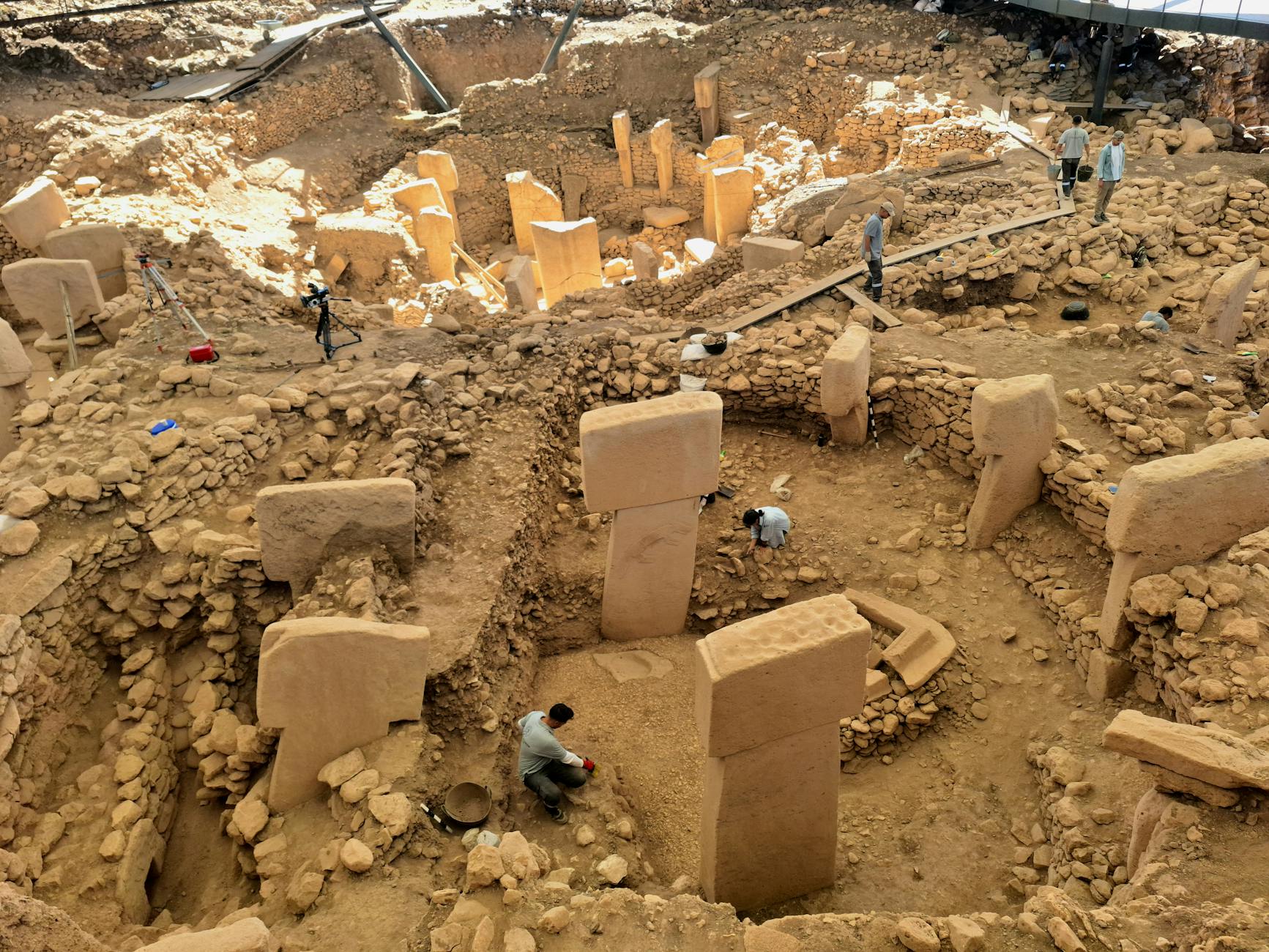
In a groundbreaking revelation that has sent shockwaves through the archaeological community, researchers have unearthed artifacts and structures dating back 6,000 years. This monumental discovery not only pushes the boundaries of our understanding of early human civilization but also challenges long-held theories about prehistoric societies. From advanced pottery techniques to monumental architecture, these findings provide an unprecedented glimpse into the lives of our ancestors.
This article explores the most significant 6,000-year-old archaeological discoveries, the methodologies used to date these relics, and the implications they hold for modern science and anthropology. Whether you’re an enthusiast, student, or professional in the field, this deep dive will equip you with the knowledge to appreciate the magnitude of this discovery.
—
In 2023, a team of international archaeologists led by Dr. Elena Vasquez of the Institute of Prehistoric Studies uncovered a buried settlement in southeastern Europe. The site, now known as Vasquez Ridge, revealed a trove of artifacts that date back to 4000 BCE, including:
– Handcrafted pottery with intricate geometric patterns, suggesting early artistic expression.
– Stone tools embedded with traces of ochre, indicating advanced tool-making techniques.
– A stone-walled structure resembling a communal dwelling, complete with a central hearth.
– Animal bones and seeds, providing clues about early agricultural practices.
– A series of standing stones arranged in a circular formation, possibly used for ceremonial purposes.
These findings align with the Neolithic period, a time when humans transitioned from nomadic hunter-gatherer lifestyles to settled agricultural communities. However, the sophistication of the artifacts suggests a level of organization and culture far more advanced than previously assumed.
To confirm the age of the site, researchers employed radiocarbon dating on organic materials found within the layers of sediment. The results placed the artifacts firmly within the 4000-3800 BCE range, solidifying their status as one of the oldest known Neolithic settlements in Europe.
“This discovery is a game-changer. The level of craftsmanship and social structure evident in these artifacts suggests that our understanding of early European societies needs a major revision.” — Dr. Elena Vasquez, Lead Archaeologist
—
The Vasquez Ridge findings are not just another archaeological dig—they represent a paradigm shift in how we perceive prehistoric human development. Here’s why this discovery is so groundbreaking:
Previously, it was believed that large-scale agriculture in Europe began around 3500 BCE. However, the seeds and tools found at Vasquez Ridge indicate that farming practices were established as early as 4000 BCE. This suggests that early humans were experimenting with domestication far earlier than previously thought.
The pottery uncovered at the site features complex geometric designs, which were previously associated with much later civilizations. This indicates that early humans had not only functional but also aesthetic and symbolic expressions, hinting at the development of early belief systems.
The stone-walled structures and central hearth suggest a highly organized communal lifestyle. This challenges the notion that early Neolithic societies were rudimentary and disorganized. Instead, it points to a structured social hierarchy and possibly even early forms of governance.
While no metal artifacts have been found yet, traces of worked stone and ochre suggest that the inhabitants may have been experimenting with early metallurgical processes. If confirmed, this could push back the timeline of metalworking in Europe by several centuries.
The circular arrangement of standing stones is reminiscent of later megalithic structures like Stonehenge. This raises fascinating questions about the spiritual and religious practices of these early communities.
—
For decades, archaeologists have relied on a linear model of human progress, where advancements in agriculture, art, and social organization occurred in a predictable sequence. The Vasquez Ridge findings disrupt this narrative in several key ways:
Traditional views portrayed early Neolithic humans as rudimentary and unsophisticated. However, the intricate pottery and communal structures found at Vasquez Ridge suggest a society that was highly developed and organized. This forces historians to reconsider the term “primitive” when describing prehistoric cultures.
Many textbooks place the advent of European civilization around 3000 BCE, with the rise of the Cucuteni-Trypillia culture and later the Minoans. The Vasquez Ridge artifacts, however, suggest that complex societies emerged much earlier, potentially reshaping the chronology of European prehistory.
The presence of non-local materials at the site indicates that the inhabitants of Vasquez Ridge were engaged in long-distance trade. This suggests that early European societies were more interconnected than previously believed, challenging the idea of isolated, self-sufficient communities.
—
Modern archaeology relies heavily on cutting-edge technology to uncover and analyze ancient sites. Here’s how researchers at Vasquez Ridge employed technology to unearth these secrets:
Light Detection and Ranging (LiDAR) was used to map the terrain beneath dense foliage. This technology revealed the layout of the settlement, including the circular stone formation and potential buried structures.
GPR was employed to detect subsurface anomalies without disturbing the soil. This helped archaeologists identify the locations of hearths, storage pits, and other features beneath the surface.
To analyze the composition of the artifacts, researchers used portable XRF spectrometers. This allowed them to determine the origin of raw materials and identify any traces of early metallurgy.
Genetic studies on the animal bones and human remains found at the site are underway. This could reveal information about the diet, migration patterns, and health of the early inhabitants.
Advanced 3D scanning and modeling were used to reconstruct the settlement digitally. This not only aids in preservation efforts but also allows researchers to study the site remotely.
—
Vasquez Ridge is not the only site from this era that is rewriting history. Here are some of the most significant 6,000-year-old discoveries from around the world:
Often referred to as the world’s oldest temple, Göbekli Tepe predates agriculture and is believed to have been built by hunter-gatherers. Its intricate stone carvings and massive pillars suggest a sophisticated understanding of engineering and art.
The Jiahu site in Henan Province revealed some of the earliest examples of Chinese writing on tortoise shells, as well as early musical instruments and rice cultivation techniques.
The Vinča culture is known for its advanced proto-writing system and massive settlements. Artifacts from this culture include figurines, pottery, and tools that suggest a highly organized society.
The Carnac Stones are a series of standing stones arranged in precise alignments. While their purpose remains a mystery, they are among the oldest megalithic structures in the world.
Although slightly younger, Skara Brae is one of the best-preserved Neolithic settlements in Europe. Its stone-built houses and advanced drainage systems provide insight into daily life 5,000 years ago.
—
The Vasquez Ridge discovery is more than just an academic curiosity—it has profound implications for our understanding of human history, anthropology, and even modern society.
If further research confirms that complex societies existed 6,000 years ago, history textbooks will need to be rewritten. This could shift our understanding of the Neolithic Revolution and the origins of civilization.
The genetic and cultural data from Vasquez Ridge could provide clues about early human migration patterns, particularly in Europe. This could help us trace the movements of ancient populations and their interactions.
The agricultural practices of the Vasquez Ridge inhabitants were likely more sustainable than modern industrial farming. Studying their techniques could offer insights into eco-friendly agriculture.
The advanced pottery and art found at the site suggest that creativity and symbolic thought emerged much earlier than previously believed. This could reshape our understanding of human cognition and culture.
The discovery of Vasquez Ridge has already sparked interest in cultural tourism. Efforts are underway to preserve the site and develop it as an archaeological park, similar to Göbekli Tepe or Stonehenge.
—
The work at Vasquez Ridge is far from over. Here’s what researchers are planning next:
Future digs will focus on uncovering more structures and artifacts, particularly in areas identified by LiDAR and GPR scans.
DNA analysis of human remains and animal bones will provide insights into the diet, health, and origins of the inhabitants.
By studying pollen and sediment layers, researchers hope to reconstruct the climate of the region 6,000 years ago and understand how it influenced human settlement.
The Vasquez Ridge findings will be compared with other contemporary sites, such as those in the Balkans and Anatolia, to identify cultural connections and trade networks.
Archaeologists plan to launch educational programs and virtual tours to engage the public and foster a deeper appreciation for prehistoric heritage.
—
If you’re fascinated by the Vasquez Ridge discovery, here are some ways to dive deeper into the topic:
Many museums around the world house exhibits on Neolithic Europe. Check out:
– The British Museum (London)
– The Louvre (Paris)
– The National Museum of Archaeology (Valletta, Malta)
For a more technical dive, explore papers published in journals like:
– Journal of Archaeological Science
– Antiquity
– European Journal of Archaeology
Several documentaries have covered groundbreaking archaeological discoveries:
– “Secrets of the Stone Age” (BBC)
– “Göbekli Tepe: The World’s First Temple” (National Geographic)
Stay updated on the latest discoveries by following organizations like:
– Archaeological Institute of America
– UNESCO World Heritage Centre
—
Researchers found a Neolithic settlement dating back to 4000 BCE, including pottery, stone tools, animal bones, seeds, and a circular stone formation that may have had ceremonial significance.
The age was confirmed using radiocarbon dating on organic materials found within the sediment layers.
It challenges existing theories about the timeline of European civilization, suggesting that complex societies emerged much earlier than previously believed. The artifacts also indicate advanced agricultural, artistic, and social practices.
There are plans to develop the site as a cultural heritage park, similar to Göbekli Tepe, allowing public access in the future.
Yes! Other significant 6,000-year-old sites include Göbekli Tepe (Turkey), Jiahu (China), and Vinča (Serbia).
Follow updates from the Institute of Prehistoric Studies or subscribe to archaeological news outlets like Archaeology Magazine.
—
The 6,000-year-old discovery at Vasquez Ridge is not just a triumph for archaeology—it’s a testament to the ingenuity and resilience of early human societies. By pushing back the timeline of complex civilization, this find forces us to question what we thought we knew about our ancestors.
As researchers continue to excavate and analyze the site, we can expect even more revelations that will reshape our understanding of history. For now, the Vasquez Ridge discovery stands as a monumental milestone in the story of humanity—a reminder that the past is far more intricate and fascinating than we ever imagined.
“Every shard of pottery, every stone tool, and every buried hearth tells a story. Vasquez Ridge is not just a site; it’s a window into the dawn of human civilization.” — Dr. Elena Vasquez
Stay curious. The past is still being written.
—